Unknown's avatar

After the Org

Photo by Pixabay on Pexels.com

The true follower of Christ will not ask “If I embrace this truth, what will it cost me?” Rather he will say, “This is truth. God help me to walk in it, let come what may!” – A.W. Tozer

LIFE IN THE ORG

I must have been 5 or 6 years old. I was at my little friend’s house across the street from where I lived.

“You’re going to die in Armageddon,” I blurted out in cruel, childish innocence.

My friend’s father happened to overhear my statement. “Jesus loves everybody!” he said, “I think you had better go home now!”

This is such a long-ago memory that I can’t be sure of our exact words. But I do remember the feeling of confusion and rejection brought on by the neighbor’s reaction to my foolishness. I could not at that time possibly have understood that I had been taught regrettable religious lies by my family, who loved me dearly, and who themselves had been brought up with the same lies.

I was raised as a Jehovah’s Witness. My parents, grandparents, and great grandparents had all been Jehovah’s Witnesses. It was all I knew for 46 years of my life until, during the recent pandemic lockdowns, I finally woke up.

My mother taught me about Jehovah God from a dark red book called “You Can Live Forever in Paradise on Earth.” I loved that book, especially the illustrations. It had bright, technicolor paintings of “the New System”, as we called it then. I wanted with all my heart to be there in paradise with the lions and elephants. And I loved Jehovah, who promised that everyone who obeyed him by being part of his organization would get to live there.

Jehovah’s Witnesses put enormous emphasis on evangelism. From the time I was a small child, I went “from house to house and door to door” (lyrics to a song we sang) distributing Watchtower and Awake magazines, brochures, and books. We were taught that canvassing our communities with the “good news of the Kingdom” was the most important thing we could possibly do for Jehovah. A core early memory of mine was was walking down a street while in the door to door ministry in a tiny town in north Idaho with my grandma. I was looking at my little brown shoes when grandma told me that I had beautiful feet because those feet were carrying a life saving message. (Isaiah 52:7) That conversation never left me and contributed greatly to my spiritual formation.

I was taught that everyone outside of “Jehovah’s organization” would be destroyed by God’s fire balls and earthquakes in the battle of Armageddon. We had graphic pictures of that in the red book too. This was worrisome to me, because it seemed like the kids in my fourth grade class at school were mostly pretty nice. I didn’t want them to die like that. So I tried to tell them. I even wrote a note about it during class and passed it around the entire classroom. As you can imagine, that did not go over well with my teacher.

Although I wanted to get baptized probably from the age of 8 on, my parents wisely made me wait until I was 12, almost 13 before I was allowed. By that time, much of my excitement about it had worn off, but I was still thrilled to officially “symbolize my dedication to Jehovah” through water baptism at the 1988 international convention of Jehovah’s Witnesses in Vancouver B.C. It meant that I could finally auxiliary pioneer (spend a 60 hours per month in the door to door evangelizing ministry).

Nearly every summer during my teens, I spent several weeks staying with my grandparents in Moscow, Idaho, where we spent nearly every day all day in the door to door ministry. I dearly loved and respected my grandparents. Their devotion to God and his organization impressed me. The skillfulness with which they explained their faith to perfect strangers inspired me. They were my role models and I hoped to someday be as adept and devoted as they were.

After I graduated from high school, I immediately went into the full-time ministry, which for Witnesses entailed spending 90 hours per month evangelizing from door to door and on city streets. Soon, I was also serving in a Spanish-speaking congregation, having learned some Spanish in school. My pioneer partner also wanted to be a missionary and was saving up to go to Ecuador. Although I didn’t have the funds to go, I wanted very much to go there with her. I hoped I would eventually be invited to Gilead, a school for the training of missionaries. My motives for all of this were good – I loved God and I loved people. All I cared about was pleasing Jehovah and doing the highest good for the greatest number of people possible. I truly believed that baptizing people into my religion was the way to do that.

Instead of moving to Ecuador or going to Gilead, I met and married my husband. We had three beautiful boys, all of whom we raised as Jehovah’s Witnesses, just as we had been.

Through the years, I had many experiences as a Witness that should have given me pause about the organization in which I had been raised. I saw much domestic abuse, physical as well as verbal, among my Witness friends. I heard about a case of child molestation at the hands of a Witness man. I had many severely depressed friends, heard about suicides, and went through several of my own nervous breakdowns. All was not well in our “spiritual paradise”, as Witnesses are taught to call the organization. But even so, I could not conceive of ever leaving it. In my mind, there was absolutely no way that “the truth” was not really the truth.

Although I would not have admitted it then, I believe things began to unravel for me during one of our annual memorial celebrations. Jehovah’s Witnesses do not celebrate communion the way Christians do it. Once a year, they gather to hear a talk about how Jesus died for our sins. During that talk, we are reminded that since only 144,000 anointed followers of Christ will go to heaven, that most of us will not need to drink the wine or eat the bread – the emblems, as they call them. Only the anointed get to partake. The rest of us observed by passing the bread and then the wine among us without partaking. We were taught that only the anointed know that they are anointed and that we were not to ask them questions about how they knew. They just knew, and if we had any question at all in our minds about whether or not we were anointed, we weren’t.

During one particular memorial of this kind, I had an extraordinary experience. At the time, I had no way to understand what was happening to me. Now I know that I was experiencing the presence of God through the Holy Spirit. I was given a vision inviting me to go heaven to be with Jesus. Embarrassingly, I could not hold back my tears. I just felt flooded with love and acceptance and I didn’t know what to do about it. I wasn’t supposed to feel this way. I was not supposed to be having this experience. It terrified me so much that I actually told God that if I was not really of the “anointed”, that I wanted him to take away the feelings. He did, so I assumed that I had merely had a psychotic break and that I should try to go back to normal.

However, over the years, I could not forget what had happened to me. I grew increasingly interested in finding out from “anointed” ones what kind of experiences they had had. I also grew increasingly impatient with some of the attitudes I observed towards Witnesses who claimed to be anointed. Instead of being believed, many were accused of being mentally ill. I dreaded that happening to me, especially since I had already had bouts of depression and knew that if I claimed to be anointed, it would likely be blamed on that. So, year after year, I would pass that bread and wine like everyone else, all the time wondering if it was wrong of me to reject it.

The only other time in my life that I remember feeling the way I did at that memorial was when I was a little child. It must have been during the time my mother had studied the red book with me. I was just becoming aware of God and learning to pray for real, not the recited prayers I was taught as a little one. I remember standing in my bedroom and suddenly being flooded with the presence of God. All I could think of was that I wanted him to hold me in his arms. I wanted to just crawl into his lap and stay there forever. I thank God for that experience and for the one I had at the memorial, because they eventually led me back to him. Unlike many others who had been raised as Witnesses, I knew there was more. I knew what it felt like to be in the presence of the Almighty.

Shortly before the recent pandemic, probably sometime in 2018 or 2019, I asked God to let me feel again the way I had felt about him as a child. With the exception of my experience during the memorial, it had been decades since I had felt the weight of his loving presence. He answered that prayer, but not in the way I expected. What I didn’t know then was that in order to get that back, I would need to come out of my beloved religion.

The organization of my childhood was simpler than it is now. There was no JW broadcasting, no JW.org, no digital Bibles or publications, no music videos. We just had our Bibles and our magazines. We had our meetings where my piano teacher played piano to accompany our singing of the “Kingdom Melodies.” But in 2014, everything began to change. Everything went digital and our governing body members overnight became celebrities after the launch of JW Broadcasting. I wanted to like this. I wanted to appreciate it. But something about it felt wrong. Something about it felt fake.

After several years, I got used to the new digital format. Although that niggling doubt in the back of my mind never completely left, I truly felt privileged to be able to remotely attend every annual meeting and every Gilead graduation, which in the past had been reserved for only a select few. I enjoyed the new music videos and getting to hear our beloved governing body members speak to us on a regular basis. But something changed in 2020.

WAKING UP

Most thought we would be back to our Kingdom Halls within a couple of weeks after we were shut down due to a novel virus. Somehow, though, I didn’t think so. I had seen enough of what it had done to China to know that this was going to be big. So when we first got the announcement that we would not be having in-person meetings, I cried and cried. I prayed for every single family in my congregation, asking God to protect them both physically and spiritually. Because our regular door to door ministry was also curtailed, we began to write letters to people in our communities instead. I wrote piles of them. I wanted people to know we hadn’t forgotten about them and that we still cared.

Soon, we started to hear news of a new vaccine being formulated. This was supposed to avert the worst of the danger and get us all right back to work and to church. Ever the medical sleuth, I decided to dive in and do as much research as I could about the virus and the potential for a successful vaccine. What I discovered could fill a book of its own. It had me very worried.

When it comes to medical treatments, the organization had never been overly controlling (except on the matter of blood transfusions, which is a whole other topic.) But for the most part, we had always been told that medical treatment was a matter of personal choice and that we should never try to manipulate one another in that very personal area. Sometimes we would have articles in our magazines about certain treatments, but the final choice on how to handle medical matters was always left up to us. That is how I assumed the pandemic would be handled – that the facts might be presented, but that we would be left alone to make our own decisions. My assumptions turned out to be incorrect.

Things began to feel ominous when we began having “governing body updates” once a month on JW Broadcasting. The niggling doubts I had had before about the direction the organization seemed to be headed turned into alarm bells as I became painfully aware of the fact that these updates were becoming more and more manipulative. The apparent purpose of the updates was to keep Witnesses informed about how the pandemic was affecting the organization and to instruct us on what the governing body felt was the best course of action regarding safety measures and medical treatment. This seemed like a radical departure from their normal stance on most types of medical decisions. And the videos used blatant forms of manipulation which were at the same time deceptive and persuasive to Witnesses who felt that the governing body was speaking for God. The outcome was that Jehovah’s Witnesses walked in lockstep when it came to their thinking and decisions regarding public health and personal medical decisions. Although the governing body claimed that Witnesses had personal choice on these matters, the truth is that there was no room for deviation. Those who fell out of step with the majority were often shamed or even excluded.

We were made to feel that if we didn’t fall in line with everything the governing body said, we were rebelling against God himself. If I had had no love for God, that wouldn’t have hurt so much. But I did, and it was excruciating. I had finally come to a place in my life where my conscience was at odds with direction coming from the organization. The problem was, I had always been taught that those men were the only ones in the world who had a direct line of communication to God and that to disobey them was to disobey God. How, after having that drilled into my mind for a lifetime, was I supposed to deal with the fact that these supposedly Godly men seemed to me to be manipulating in a way that was harming the people I loved the most?

Because of what I was seeing in the organization, I decided to engage in an act of rebellion. Though we were forbidden to look outside the organization for information on the Bible or the organization itself, I did it. I read a book written by an ex governing body member, Raymond Franz, who was kicked out of the organization in 1980 for holding a different opinion on certain theological matters. His book, Crisis of Conscience, is sort of a right of passage for ex JWs. Once you read Franz, for many there’s no going back. All is revealed, pandora’s box is open, you’ve taken the red pill.

Imagine dealing with the psychological pain of what I just described and at the same time being hit with the most painful disease you have ever faced. Right after I read Crisis of Conscience In the autumn of 2021, I came down with a severe case of Covid-19. Fortunately, I avoided the hospital. But probably because I already had an autoimmune disease, I became completely debilitated and non-functional. I stopped sleeping, could barely eat, and endured excruciating stomach pain and all-over body pain for many, many months. Probably the most painful aspect of the illness was that it caused severe depression and brain fog. I would have bouts of horrible physical pain and suicidal mental anguish. The level of suffering was utterly demonic. But it was through this suffering that I began to wake up to a greater spiritual reality.

Once I was well enough to think and read some of the time, I decided, as my dear friend Vivian describes it, to “take off my Watchtower goggles” and for the first time read the Bible without an agenda other than the desire to know God and to discover what he had really revealed through the pages of the scriptures. It didn’t take long for me to realize that there really didn’t seem to be any scriptural basis for many of the doctrines I had been taught. Even so, I had a lot of fear. I wondered if maybe I really was just a rebellious apostate. Maybe I was wrong and the organization was right.

One day I took a walk and had a little talk with God. I very insistently told him that if I was wrong about the organization, I needed him to show me NOW, and I mean NOW. I told him that if I was wrong, that I was maybe making the biggest mistake of my life, and I didn’t want to do that. As soon as I got home, I decided to do my daily Bible reading. I wasn’t doing it to find any answers. It was my habit to read every day. I opened the Bible to where I had my ribbon, 2 Corinthians 11. When I came to verse 3, I started to suspect I was having a supernatural encounter. By the time I came to verses 13-15, I knew I had my answer. I had received a rhema word from God, though at the time I had no vocabulary to describe it. Here are the verses I read which spoke to my heart:

“But I am afraid that as the serpent deceived Eve by his cunning, your thoughts will be led astray from a pure and sincere devotion to Christ. For if someone comes and proclaims another Jesus than the one we proclaimed, or if you receive a different spirit from the one you received, or if you accept a different gospel from the one you accepted, you put up with it readily enough…For such men are false apostles, deceitful workmen, disguising themselves as apostles of Christ. And no wonder, for even Satan disguises himself as an angel of light. So it is no surprise if his servants, also, disguise themselves as servants of righteousness. Their end will correspond to their deeds…For you gladly bear with fools, being wise yourselves! For you bear it if someone makes slaves of you, or devours you, or takes advantage of you, or puts on airs, or strikes you in the face.” – 2 Corinthians 11:3-4,13-15, 19-20 (ESV)

All at once, I understood the implications of the word I had just received. The Governing Body of Jehovah’s Witnesses were false apostles. They were disguising themselves as angels of light. I began to cry my heart out. My whole world, my whole belief system, had come crashing down. And I knew that eventually, I was going to lose everything, including my parents, my friends, and my reputation. It was even possible that I could lose my marriage and my children, though I am happy to report that that has not happened and I hope it never will.

Through my studies, I saw clearly that all true Christians, not just the 144,000 “anointed ones,” are born again and would all see Christ and be with him forever. I eventually understood that Jesus is Lord and God and that I could actually talk to him, not just through him. I understood that the Father was my Abba Father and that I was his daughter. What joy to realize that Jesus really had been calling me all those years ago at the memorial! He really had been trying to get my attention, and I had told him no. I told my Lord no because of a man-made religion. It still hurts my heart to think that I did that.

After spending a few months alone with God and my Bible, I started attending the online Bible studies of David and Vivian Aspinall, an ex JW couple who have made it their mission to reach out to and help people who have been hurt by the Watchtower organization. I started to take communion at home while in Zoom meetings with those friends. It gave me such peace and joy! But at the same time, I was horribly conflicted about my relationship with my family, most of whom are Jehovah’s Witnesses. I was having to be more and more circumspect in my conversations with them to avoid having them discover my true beliefs. I knew that if they understand fully, they would disown me, and this caused massive internal conflict.

LEAVING

When I started to develop a strong desire to find a church to attend, I realized that I couldn’t go on pretending to be a “weak” and inactive JW. I needed to tell my parents the truth both for my mental health and simply out of obedience to God. I remember feeling stabbed to the heart when I read Jesus’ words at Matthew 10:37-39:

“He who loves Father or Mother more than me is not worthy of me. And he who loves son or daughter more than me is not worthy of me. He who finds his life will lose it, and he who loses his life for my sake will find it.”

Nabeel Qureshi, an ex Muslim Christian apologist, quoted the above text in his testimony as he explained how the scriptures convicted him of his need to tell his parents, knowing that they would likely disown him, about his decision to follow Christ and leave Islam. The religion of Jehovah’s Witnesses is similar to Islam in some ways. Muslims living in countries governed by strict Islamic regimes risk their actual lives by leaving the religion. Nabeel was an American Muslim, which fortunately exempted him from that risk, but he knew that he could lose his family. JWs also risk losing all of their family and friends, especially if their families have been in the organization for several generations as mine had. Nabeel described the agony that I, too, felt as I contemplated the massive loss that I would endure and the horrible pain my family would suffer if I were to tell them the truth. And as I listened to his story, I knew that in spite of what would happen, I had to reveal the truth.

The hardest thing I have ever had to do in my life was to make myself drop in the mailbox the letter to my parents revealing my decision to leave the Watchtower organization. As soon as it left my hands into that box and I knew I couldn’t retrieve it, a deep and and uncontrollable sob shook my body and I couldn’t stop crying for hours. It was like having a limb torn off.

About a month after I sent that letter, I became aware that my local elder body had been alerted to what I had written and wanted to have a meeting with me. This sent shock waves of panic through my body as I realized I had several choices – one was to meet with the elders and tell them in person why I no longer believed that the organization was the only path to God, another was to simply refuse to meet or communicate with the elder body, and the third was to send of a letter of disassociation that I had preprepared for an occasion such as this. Choice number one, although the most honorable and possibly beneficial to my friends, seemed physically and psychologically impossible at the time. Just telling my parents had made me feel as if I was having a heart attack. I didn’t feel capable of facing a judicial committee. Choice number two could have preserved for a time some of my relationships, although it would have drawn out that stressful period of transition as well as very likely ending in my eventual disfellowshipping en absentia. I chose to send my letter. I felt a deep need to completely disconnect myself from the organization that had almost stolen my salvation, had stolen my relationship with my family, and had destroyed my mental and spiritual health. And I wanted to taste the freedom of living my life without feeling the need to look over my shoulder wondering if an old JW friend had seen me walking into a church or having a meal with my disfellowshipped son.

“Gretchen Guzman is no longer one of Jehovah’s Witnesses.” That was the terse announcement that was made at the Kingdom Hall I had attended. It is the same exact announcement that is made when a JW is kicked out of the organization for committing adultery, or molesting a child, or for any number of other heinous acts. When that announcement is made, no one is ever informed as to the reasons for it. Friends who don’t already understand the circumstances are left wondering what in the world happened. Was I an adulteress? An alcoholic? An abuser? Who would know? There is no honorable way to leave the organization of Jehovah’s Witnesses. You can slink away, trying to remain unnoticed, while telling white lie after white lie about why you’re slowing down in your meeting attendance, all the time avoiding talking about the truth that is burning in your breast. Or you can tell that truth and get the disgraceful public announcement.

The freedom was amazing. I remember walking through the grocery store parking lot and looking at every person I passed with new eyes. These were beautiful, valuable people! They weren’t other. They were human just like me. I loved them although I knew nothing about them. You truly don’t realize the extent of the psychological and social damage a high control group can do until you leave one and that damage starts to heal.

CHURCH

The first Sunday evening I walked into a church, a local Calvary Chapel called Revival Church, it was like stepping through a wall of fire. I had been taught from the time I could remember that “Christendom” was the greatest evil in the world because they were misrepresenting Jehovah and had introduced idolatry into their worship. Although I no longer believed those lies, I had a visceral panic reaction to that place. My mind was in a fog and my body was in a cold sweat. Fortunately, a kind man saw that I was new and came up to talk to me. As soon as he discovered a little of my history, he took my hand and prayed for me. This was new! About halfway through the Bible study my mind cleared enough that I was able to pay some attention and appreciate the depth of the teaching. But afterwards, the lights went down and the pastor began to pray…and sing! That was new too and it set off another set of alarm bells in my head. “This is emotionalism and manipulation!”, I thought. I had been over exposed to cessationist “discernment ministries” on the internet and it added to my fear. But in spite of that, I found myself enjoying the music and prayers. After the service, I found the man I had earlier spoken to on the phone about this church. He took my hand and prayed for me too. And then he took me to meet the Pastor. The more we talked, the more I shook. It was overwhelming to be able to speak so freely to a religious authority. It was strange to see him in a T shirt and jeans instead of a suit and tie. But I liked him. I was already very familiar with his teaching because of having watched his live streams online. I knew he loved God and that he loved the word. That was enough for me.

My introduction to church life was bumpy. Past indoctrination had left me unbelievably fearful. There were so many triggers – the big cross above the stage, the worship band (drums!), contemporary worship music, casual clothing in church, unfamiliar doctrines…It was all so strange and uncomfortable. At one point I went weeks without attending because I would get so triggered. But that felt wrong too. I didn’t like being isolated without any friends or family to lean on. And I knew that meeting with other Christians was important according to the Bible.

So I prayed for guidance. I asked God to show me what he wanted me to do. I’m pretty sure it was not much more than 5 to10 minutes after I said that prayer that my friend, the elder at the church who had prayed for me, showed up unexpectedly at my house. He said some encouraging words and prayed with me again. How could I deny that was an answer from God? I started going to church again the very next day. I also made arrangements to be water baptized, which took place a couple of weeks later on May 14, 2023. That was the day that I declared in front of the entire church that Jesus Christ is my Lord and Savior.

CONCLUSION

There is so much more to tell. But I will leave the rest for future posts. But for now, I just want to tell you that if you are in a high control religious group or in any other negative situation and feeling lost, there is hope in Jesus Christ. Call out to him. Ask him to show you the truth. If you do, I feel sure he will, and you will be made to understand what it means that he himself is “the way the truth and the life” (John 14:6), and that he loves you far more than you could ever have imagined!

Unknown's avatar

Fear is the Real Killer

man wearing face mask

Photo by Korhan Erdol on Pexels.com

I have experienced absolute terror. The fear went on for many months in varying degrees of severity. It wrecked my body and my mind.  What could possibly have been so fearsome?

I felt so sick that I thought I might die. But what turned out to be far more damaging than that sickness was the extreme fear. Because of my fear, I was unable to sleep.  Because I was unable sleep, I became sicker.  Because I became sicker, my fear became unbearable. Because my fear became unbearable, I lost even more sleep.  I began to have horrific panic attacks and became obsessed with the idea of slitting my throat with a kitchen knife.

Do you see? Fear is the real killer.

This so-called pandemic (panic epidemic?) has me worried, not because I think Covid-19 will kill me or my family, but because the news media is deliberately spreading panic and fear.  It is affecting my kids, and it breaks my heart.

Fear creates enormous stress. And stress, when chronic, can be very damaging. We don’t know if that damage is reversible. (1)  Therefore, it makes sense to try very hard to make an accurate assessment of risk so that we will be motivated to take effective action in order to increase our level of safety, and at the same time,  not give in to undue or prolonged fear.

Our creator knows that fear hurts our bodies, our minds, and our hearts. Therefore, he inspired Bible writers to record many reminders for us not to fear, but to have courage. Here is just one:

“Do not fear, for I am with you. Do not anxiously look about you, for I am your God. I will make you mighty. Surely I will help you. Surely I will uphold you with my righteous right hand.” – Isaiah 41:10 (LSB)

God is telling us that our reason for courage is not because there is nothing dangerous out there, but because we can have his help just by asking for it in faith. He doesn’t want us to live in fear, but to rely on him.  He has even given us a reason not to fear death itself:

“He will swallow up death for all time, and Lord Yahweh will wipe tears away from all faces…” – Isaiah 25:8 (LSB)

What comes after death will be beyond our imagining:

“Eye has not seen, nor ear heard, nor have entered into the heart of man the things which God has prepared for those who love him.”- 1 Corinthians 2:9 (NKJV)

So do not fear what you are being told to fear. (Isaiah 8:12) Take reasonable precautions and rely on God for strength.

(1) Central effects of stress hormones in health and disease: Understanding the protective and damaging effects of stress and stress mediators  , European Journal of Pharmacology, volume 583, issues 2-3, 7 April 2008, pages 174-185.

Unknown's avatar

I Can See Clearly Now

003

I see now that this place is beautiful.  After 18 years, I see.

I was so homesick when I moved here as a young bride.  I wanted my mom.  I wanted pine trees and yellow bells and buttercups.  I wanted lakes to swim in and hills to sled down.  I just wanted to go home.

The more trapped I felt, the uglier this place became.  Ugly and mean.  Smelly and dirty.  Poisonous.  My ruin.  My hatred magnified every crime, bad smell, or dusty wind a thousand-fold.  I loathed this place.  How many times did I say it?

This place was not my ruin.  My hatred for it was. Those dark ugly feelings about my home. The ground I walk on. The earth that feeds me.  I hated that which nourished my body and could have nourished my soul.  I hated it so much that my wish to leave became a desperation, a frenzy.  And when there were no jobs and the sale of our house fell through, when staying became the only option, I disintegrated.  I fell completely apart at the seams.  My grief for my old dream of that other home was profound.  Eighteen years of striving towards my jail break had come to nothing.

That’s what it took to bust the tough outer coating of my heart-seed so that it could put tender root tendrils down into this soil.  I knew only love could save me.  The hatred finally melted and a veil was lifted.  Finally, I could see:

The lilacs and apple blossoms are heavenly.  The water on the canal sparkles, jewel-like in the sun.  The mallards and the rabbits, the robins and the meadowlarks are enchanting. The smell of sage on a rainy day, how the light and shadows play on the distant hills, the smell of river trees in the summer, and the distant snowy peaks make this place beautiful.

None of God’s creation deserves to be hated.  I may hate what man does to it, but I cannot hate the ground, the grass, the birds, the water.  All nature is capable of healing, and there is beauty everywhere for those with eyes to see and a heart to understand.

Unknown's avatar

Kids Need Nature


By Mary Richmond

By Mary Richmond

One wet spring, the hills behind my childhood home came alive.  The usually dry ground sprung leaks so that the hills seemed to be crying for joy.  I discovered one of those leaks, a small hole in the ground from which sweet, icy-cold water burbled forth.  I knew that this ground-level fountain was different from the puddles from which the dog lapped.  This was clean water from deep within the earth.  I got on all fours and took a long pull.  It was the best drink I’ve ever had.

That was the first and last time I ever had the privilege of discovering a spring, and it made a lifelong impression.  It worries me that so many kids are deprived of the opportunity to have experiences like that.  Daily, intimate contact with nature is vital to the well-being of children, a point which Richard Louv brought home in his book, Last Child in the Woods: Saving Our Children From Nature-Deficit Disorder.

In the introduction to the book, Richard Louv describes a conversation he had with his son.  The boy had wondered why “it was more fun” when his dad was a kid.  My own boys wonder the same thing.  They pine for open spaces where they would be free to play and create.  Places with trees.  Places like my childhood home.  What science is beginning to make clear to us, my children seem to instinctively understand: kids need nature.

Nature and Health

“Those who contemplate the beauty of the earth find reserves of strength that will endure as long as life lasts.” – Rachel Carson

I used to run up the steep hills behind my house without getting winded.  My daily tramps through the fields and woods had made me strong.  My friends loved to come romp with me in the hills, but they often could not keep up.  Lives spent parked in front of the television had made them soft.

I know that if I had lived in a suburban subdivision, there would have been little to propel me into the out-of-doors.  What got me outside was not the thought that I needed some fresh air and exercise, but the prospect of all those acres to explore – “scope for the imagination”, as Anne Shirley would have said.  I didn’t care a snit about the condition of my muscles or lungs, or how much my play was increasing blood-flow to my brain.  All I knew is that outside felt good, and that is where I wanted to be.

Nature and Spirituality

“I go to nature to be soothed and healed, and to have my senses put in tune once more.”  – John Burroughs

I could see out over the plains all the way to the distant mountains from my perch on the hill.  That was where I went to be alone with God.  Above it all, I was able to put my troubles in perspective and gain a sense of peace.  All children should have the opportunity to find a special place, a thinking spot.  They should, but they do not, which is why frequent family outings to the woods or the mountains, the lake or the river are so important.

On one such outing, I had invited a student and friend to join me and my family.  On a trail in Mt. Rainier National Park, she stopped to admire the chain of jagged peaks marching off into the horizon.

“How could anybody deny that God made this?”  she exclaimed in wonderment.

By Mike Baird

By Mike Baird

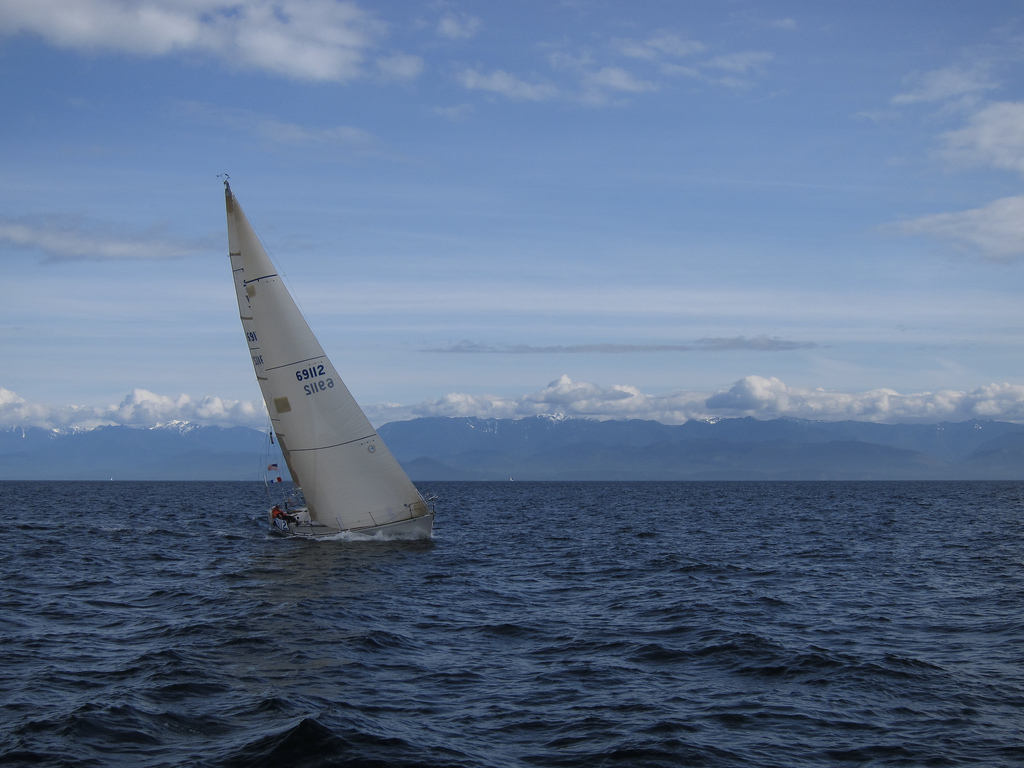
My own son said something similar once.  When he was 5 years old, I took him on a camping trip to the Olympic Peninsula on the Strait of Juan de Fuca.  We could see all the way to Canada from our side of the straight, and daily we would watch the cargo ships, sailboats, and even a submarine pass by.  But what really impressed my son was not anything man-made.  One day we were examining the anemones and starfish in a tide-pool.

“I just love Jehovah!” said my son.

Such is the power of nature to inspire awe and appreciation.

Nature and Intelligence

Howard Gardner is known for his theory of multiple intelligences.  He originally theorized that there are 7 intelligences: linguistic, logical-mathematical, spatial, bodily-kinesthetic, musical, interpersonal, and intrapersonal.  He more recently added an eighth intelligence:  naturalist.

The core of naturalist intelligence is the human ability to recognize plants, animals, and other parts of the natural environment, like clouds or rocks.

–  Howard Gardner

Transcendent experiences in nature intensify our senses and ability to see connections.  Many of our most celebrated authors seem to owe much of their genius to their attunement to the natural world. Jane Austen, Henry David Thoreau, John Muir, Rachel Carson, and Barbara Kingsolver are a few that come immediately to mind.

Leslie Stevens views nature as an educational necessity, which is why she has moved her family to the edge of a canyon where her children might be free to roam and play.  Here, she describes how nature taught her about the concept of shelter:

A child who is allowed to run free in a place that is natural will very quickly begin to look around for a special shelter.  The interior framework of bushes is inspected and judged for its suitability to act as a fort.  Trees, especially mature ones, provide towering castles, and the best climbing branches are claimed as “rooms”.  In contrast, the exposure a child feels running across a grassy, sunny, slope or wide, open field allows her to feel the lack of shelter.  It is only through experiencing both opposites that children begin to understand each part more deeply.

I learned much about shelter from my own wanderings.  A big old ponderosa pine inhabiting some woods on a hill near my home provided the perfect skeleton for my playhouse.  The branches of the tree curved to the ground as if it were purposely sheltering the place around its roots.  I saw that with the addition of some sticks for more support, that I would be able to insulate the framework with bundles of pine-needles to create a cozy shelter.  I engaged the cooperation of my brother and sisters, and we soon had a little house to please any hobbit.  Many happy hours were spent there.

By Mike Petrucci

By Mike Petrucci

Other things I learned from my experiences in nature include the fact that snow berries are very bitter, lichens are edible but taste very bad, maple leaves are edible and taste very good,  red clover is an acceptable substitute for bubble gum, certain types of flowers contain so much nectar that it can be sipped from the blossoms, moss is one of the first green things besides crocuses to appear in the Spring, and pineapple weed tastes like chamomile.  I also learned that what we do makes a difference to the Earth.  Because I loved to see beautiful things, I deeply resented litter and would never have thought of tossing my candy wrappers on the ground.  For the same reason, I hated to see trees being cut down or streams polluted or the advancement of urban sprawl.

Important lessons I would say.

Nature and Creativity

Natural, more loosely structured environments encourage more creative play.  On the playground at my school, we played tether ball.  But in the hills behind my home, we played Crystal Kingdom, Lost, Train-wreck, and Indians.  We created entire fictional worlds up there.  It seems as if this type of play must be the stepping stone to the type of creativity that, in later years, writes great novels, paints beautiful pictures, and sculpts beautiful objects.

I could write pages about all the famously creative people who were inspired by their experiences in nature.  I will, instead, let a few of them speak for themselves.

“It is not the language of painters but the language of nature which one should listen to…The feeling for the things themselves, for reality, is more important than the feeling for pictures.” – Vincent van Gogh

“I am well again, I came to life in the cool winds and crystal waters of the mountains…” – John Muir

“And this, our life, exempt from public haunt, finds tongues in trees, books in the running brooks, sermons in stones, and good in everything.” – William Shakespeare

“Come forth into the light of things, let nature be your teacher.”  William Wordsworth

I wrote poetry when I was a girl.  The inspiration came from trees, sun, wind, and animals.  I don’t think I would have written things like the following haiku without intimate contact with those things.

Silence in the wood

A silence the wind can blow

With me there is peace

How many of our young Shakespeare’s and Van Gogh’s sit languishing in classrooms and in front of screens?

The Problem of Distraction

My kids would sit at the computer or with a tablet like punch-drunk social butterflies connected to the hive mind nearly all of the time, I believe, if I allowed it.  Television and internet have drastically changed the way that we relate to the world.  We are at once connected and disconnected.  I once heard electronic media described as WMDs, weapons of mass distraction.  That seems apt.

Henry David Thoreau had some thoughts on the social media of his time, newspapers and letters, that now seems almost prophetic:

You may depend on it that the poor fellow who walks away with the greatest number of letters, proud of his extensive correspondence, has not heard from himself this long while.

Change that to read “the greatest number of likes”, and you have a profound indictment of uncontrolled use of online social media.  There is nothing inherently wrong with social media, just as there is nothing inherently wrong with newspapers or letters.  But the point Thoreau was trying to make, and the one I want to make, is that those things may become a distraction from pursuits that are much more important.  We should not, as Thoreau, stated, “live for idle amusement.”

In his book, Data Smog – Surviving the Information Glut, David Shenk said this:

Turn the television off.  There is no quicker way to regain control of the pace of your life, the peace of your home, and the content of your thinking than to turn off the appliance that supplies, for all too many of us, the ambiance of our lives.  Millions of Americans have been discovering the serenity and empowerment that comes with using the OFF switch, not to mention hours and hours of newly acquired free-time with which they can begin to do some of the things they’ve never found time for in the past.

The point is this: for kids to gain the benefits of contact with nature, we have to help them unplug.  It’s amazing what happens when all the screens go dark.  The skateboards come out.  The dirt pile outside begins to look more attractive.  Young eyes begin to rest upon birds and rabbits and clouds rather than those flickering pixels.  A child begins to “hear from himself”, and I might add, from God himself as well, as God reveals himself in his creation.

The Problem of Access

I always get stir-crazy in the winter.  I miss green so much that I begin looking for ways to get somewhere, anywhere, that will soothe me.  One winter, after having researched Washington State Department of Fish and Wildlife river access points, I went looking for somewhere to walk where I could see water.  Every access point I checked was closed to the public.  The only way to approach the river anywhere near my home would have been to break the law.

I finally found a hill that overlooked the river that was not farmed (quite rare in my part of the world).  I parked my car and took a walk with my dog.  I enjoyed my solitude while Elsie bounded around in the brush, sniffing here and there, long tongue hanging out the side of her mouth.  She flushed a covey of quail out of the sage as we approached the crest of the hill where we could see the sparkling coils of the river below, gray, leafless trees flanking its sides.  I stood for a long while and let the scene penetrate and calm my beauty-hungry heart.

As I was driving away, I saw it.  NO TRESPASSING.

I had done the thing I had been hoping to avoid.  I had broken the law in my attempt to get close to the water.

As a property owner, I understand what it is to feel protective of my patch of ground.  I certainly don’t want herds of teenagers partying on the back forty (or in my case, the back 1/4), tossing their cigarette butts and empty beer bottles all over the place.  I don’t want hunters with their rifles tramping over my pasture in search of pheasants.  But why can’t I go to the river?

Nearly all riverside land in the 20 miles surrounding my town is privately owned, most of it by farmers who are in the process of completely destroying it.  They plow land right up to the river’s edge, encouraging soil erosion.  Chemical fertilizer and pesticide runoff  cause algal bloom and poison fish so that we take our lives into our hands if we try to eat anything from the river.  These farmers don’t want the general public tramping through their fields, orchards and vineyards to get to the river.  But we shouldn’t have to.  The state owns pieces of land all along the it.

One of the reasons people are denied access to state land is because ecologists want to protect what’s left of wildlife habitat.  Although I agree that protection of wildlife habitat is a necessary and laudable goal, the state shoots itself in the foot by failing to provide year-round access to state land not just to hunters and fisherman, but to all of us who just want to enjoy nature.  If we can’t find places near home where our children can go on a daily or weekly basis, there may be no one left in the future who even wants to protect wildlife habitat.  How can we encourage a love of nature in our children if they can’t even get near it?

It is difficult, but not impossible to find places close-by that might inspire love of nature in children.   We don’t have to go to Rainier National Park or the Oregon coast just to enjoy the natural world. Beauty is everywhere for those who have eyes to see.  Sometimes little patches of leftover wildness can be enough.  On our walks along an irrigation canal near our home, my kids and I often spot ducks lazily paddling in the water.  The blackberry brambles whose juicy, dark purple jewels are a delight to my boys also grow along that canal.  The sycamore in the yard, the flowers in the garden, and the butterflies in the grass all wait outside our door to be appreciated.


What price do our children pay for our disconnection from nature?  The price is stunted talent, soft, weak bodies, lost opportunities for learning, and a planet in ruin.  The price is depression, anxiety, and apathy.  The price is disconnection from God and from all he created.  The price is too high.

We must teach our children to unplug, go outside, and open their eyes.  Show them how important contact with nature is by driving them to the wildest places we can find.  Talk to them about what they see, about the significance of it.  Revel with them in the beauty.  Almost nothing could be more important.

richardlouv.com

Home


I am a participant in the Amazon Services LLC Associates Program, an affiliate advertising program designed to provide a means for sites to earn advertising fees by advertising and linking to amazon.com.  This post contains an affiliate link.

All photos under Creative Commons license


Unknown's avatar

Kids and Chemicals

glowingember

Like an ember glows bright red when blown upon, my son’s skin reddens in response to chemicals.  His nose runs, his eyes become glassy, and his breathing labored.  As if someone had slipped speed into his drink, his mind races and so does his body.  This has been my son’s reaction to substances like fragrance, cleaning chemicals, and car exhaust since he was just a baby.

About a year and a half ago, we were forced to remove our boy, then 12, from public school.  The state of his health had reached crisis level.  Weepy, bloody, septic eczema plagued him day and night.  Asthma left him breathless.  He cried nearly every evening when we insisted he go to school the next day.

Public school, far from being a place of safety, can be one of the most dangerous places a chemically sensitive child goes.  Things like regular fumigation for pests, application of lawn chemicals, use of strong cleaning chemicals and air fresheners in classrooms, and even kids who come to school with heavy fragrance hanging about them from fabric softener, deodorant, hair products, and cologne all contribute to the creation of a very toxic environment.  No child should be subjected to these things.  But for a chemically sensitive child, school is very often a nightmare beyond anything most of us can imagine.

I never wanted any of my kids in school.  But for my middle son especially, it felt wrong.  It was like trying to pound him into a wrongly shaped container.  It made him sore, out of sorts, and very sick.  That’s why I was so relieved when my health finally improved enough to pull him back out.  Just in time, too.  I’m not sure he could have taken much more.

At first I didn’t even know how to begin to clean up the emotional and physical mess school had made of my son.  We talked and talked.  I put him in soothing baths of clay and Epsom salts.  I gave him things to help his body heal and detoxify.  I tried to teach him how to relax and think positively.  But he remained fearful, depressed and exhausted until he saw the doctor, who informed him that he was not, in fact, dying.  From that moment forward he began to rally.  Although his rash had slowly been healing up until that time, he now made rapid progress in spite of the fact that we used almost none of the medicine prescribed for him, dramatically demonstrating that doctors can act as powerfully healing placebos.

My son’s travails must have begun in my womb.  When I was pregnant, our home was brand-new and smelled like it too.  It was making me sick.  Imagine what it was doing to my tiny baby, developing in that chemical soup.

“We know the developing fetus is one of the most vulnerable populations, if not the most vulnerable, to environmental exposure,” said Anila Jacobs, EWG senior scientist. “Their organ systems aren’t mature and their detox methods are not in place, so cord blood gives us a good picture of exposure during this most vulnerable time of life.” –Scientific American, Tests Find More Than 200 Chemicals in Newborn Umbilical Cord Blood

Three months after my son was born, he developed his first rash, a little patch on his cheek.  No big deal, right?  Soon, a pustule formed near the red patch which broke and gave rise to more pustules until his entire face was covered in weepy impetigo.

The antibiotics seemed to clear the rash right up.  Or had they?  Just as we began giving my son his medicine, we left for a vacation on the Olympic Peninsula.  As the rash cleared, I assumed the pink liquid was doing its job.  By the time we arrived home, not only was the infection gone, but so was the rash.  It was the first and last time for many years that the poor boy would have clear skin.

A day after our return, the rash reappeared, and for the first time it began to dawn on me that home might be the problem.  Not only did we live in a brand-new house still off-gassing toxic chemicals, but also in a dirty, dusty agricultural valley, reeking of cow manure and drenched in pesticides.

On our trip, we had breathed some of the cleanest air available on planet earth, air that was continually scrubbed by frequent rain, rich in oxygen, and infused with calming ocean salt.  I believed then, and still believe now, that it was the air that healed my son’s rash, not the antibiotics.  From that time forward, I would continuously look for ways to move our family to cleaner air.

Why Living Near the Ocean is Beneficial to Your Health, Natural Health Ezine

Straight of Juan de Fuca where the air is pure

Straight of Juan de Fuca where the air is pure

The cure for anything is salt water: sweat, tears, or the sea.

– Isak Dinesen

My son finally has clear skin.  We have not moved out of our home, but most of the chemicals seem to have moved out of it.  We still live in the dirty, dusty valley.  But the combined effects of pulling the boy out of school, plus our efforts to use only non-toxic products, to feed our kids healthy, clean foods, and to keep the air in our home clean and free of most chemicals seems to have finally made a difference.

What a novel and wonderful thing it would be to live in a world where keeping our kids safe and healthy is easy, where chemical toxicants in common products are unheard of and all children are safe.

The Biodwell Blog, Holistic Home Ecology

Photo by Sharon Mollerus

Photo by Alex Thomson

Unknown's avatar

Pet Power

Lilly Goat 004

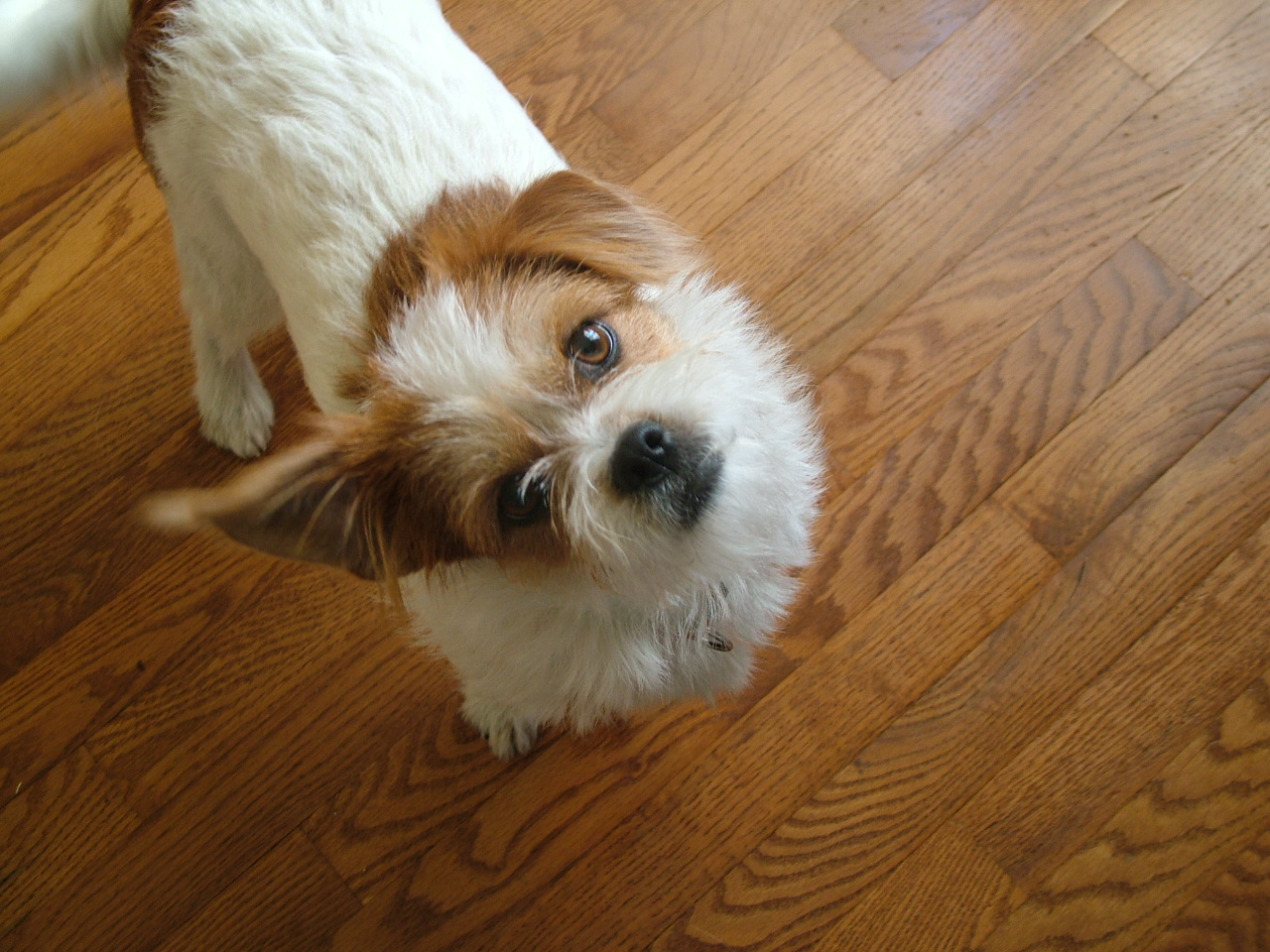
Meet my dog, Lilly Goat – aka Lilly the Pill, Pilly, Pill Pill…I think you get it.  She’s a troublemaker.  But I love her.

Here’s a typical conversation between the two of us:

Me (in baby-talk): There’s my little stupid!  You a poop faced fuzz bucket!

Lilly:  I’ll eat you up I love you so! (Proceeds to try to ingest my toes)

Me:  You bad, bad!  You baaaaad witto pup pup! (playfully incite dog to further toe violence.)

Lilly gets into a toe eating frenzy, at which point I must take evasive maneuvers.

Lilly is more than just a fun companion.  She is also good medicine.  The Healing Power of Pets, an article originally written by Peter Browne and adapted from the August 200o Asian edition of Readers Digest by Martin Williams, says that “even desperately ill patients respond to this unorthodox therapy – a cold wet nose and a furry cuddle.”  I agree.  I’m no expert on the science behind the healing power of pets, but I do know what they’ve done for me, my family, and my friends.

Fourth and fifth grades were stressful for me.  I was the quiet girl in the funny-looking glasses and hand-me-down clothes.  The kids bullied me and math was a perpetual thorn in my side.  I’m not sure how I would have coped had it not been for our horses, Honey, Tobey, and Strawberry.  Going to the pasture was my way of decompressing. I sat there in the grass just to be close to them, listening to them munch while I drew.  There was something satisfying about the rhythmic crunch, crunching, the sweet, horsey smell, the quiet snuffling.  All the stress would drain away.  I could have lived in the pasture then.

The cats helped too.  I had a big fluffy tom called Mr. Moose.  He was a lazy good-for-nothing when it came to hunting, but his cuddles were medicinal.  He was my leg warmer in bed, my dolly, and a good-natured nuisance when I was trying to draw or read.  His purr, his warmth, and his loving and trusting personality were soothing to me.

This guy looks a lot like Moose

This guy looks a lot like Moose

I don’t want to underestimate my childhood miseries, but I had no idea at that time just how painful life could become.  Just a little over two years ago when I was enduring a horrible bout of insomnia, it was my dog Elsie who was there for me day and night.  When the whole world was asleep, and the screaming black of night threatened to drive me crazy, I would lie on the floor and hug my patient dog, a warm, living, loving creature, and I would feel a little less alone; a little less like my whole world was caving in.   I always knew by her constant attendance and the look in her warm dog eyes that she knew I needed her.  Elsie is gone now, but I will never forget her calm devotion.

Lilly came to us while Elsie was still alive, a white whirling dervish, the Tasmanian Devil of dogs.  We didn’t choose her, she chose us.  Once we tamed the little beast and she became aware of what was expected of her, she began to wheedle her way into our hearts.  John Muir said in one of his essays that terriers have “little tricksy ways”.  This is true.  Lilly makes us laugh, which is one of the things that make her worth every bit of trouble she causes.  Even on my worst days, Lilly can make me feel good.  She’s the house jester, my lap warmer, and my walking buddy.  Her energy level is very high, which is just what I need right now.  I need for her to make me feel bad if I don’t get up off my butt and take her for a walk.  She has no idea she’s being useful, she just wants to go.

Animals are pretty generous with their affection.  But the love should be mutual.  For example, my mother bought her horse, Honey, when she was thirteen.  The reason she was able to do this with her $100 of babysitting money is because Honey was considered a “dog”, which is horse person talk for good-for-nothing.  She had been horribly abused and given up as a lost cause.  My mother, though, could see potential in Honey.  And she was desperate for a horse.  So she took that horse and loved her with all she had in her thirteen-year-old heart, buying the best feed, again, with babysitting money, brushing and currying faithfully, earning trust by showing affection, and eventually, training Honey to be ridden.  When Honey eventually won reserve grand champion at a horse show, people were amazed.  A newspaper article was written about how a girl had transformed a “dog” into a prize-winning show horse.  My mother’s love and devotion to that horse is the reason I could safely sit near her in the pasture and listen to her graze.  It’s why I could approach honey and touch her soft muzzle, feed her apples, and brush her flanks.

Moose and Elsie and Lilly and many of the other wonderful animals I’ve had the privilege to know over the years had love to give because that is what they had received.  Animals have needs, and sometimes those needs can seem overwhelming to those who have never experienced the responsibility.  But the responsibility itself can be healing.  We need to be needed.  The knowledge that a living creature would suffer if we did not get up and feed them, that they would miss us if we weren’t there, is often enough to keep us going when we want to give up.  I know that’s how it was for my Grandma.  Her little dog was her friend.  That’s what she always said.  The night Grandma passed away, I sat in her favorite recliner and pet that dog like my life depended on the reality of her tiny body.  I love that dog because of what she gave Grandma during the last years of her life.  And I was grief stricken not for myself and my family only, but for Grandma’s little friend.

All animals have love to give.  But how much would an animal have to give if they seldom got enough to eat, never felt a caring human hand, or never heard a kind word?  What if an animal felt that humans were too unpredictable to be trusted?  How much love would they have to give?  To experience the healing power of furry love, we have to give love first.  And the rewards are priceless.

Photo by Richard Gillin

Unknown's avatar

Move!

walking the dog

“Walking is man’s best medicine.”  – Hippocrates

I guess I’m a pretty good spokesperson for guilty non-exercisers.  I exercise in jerks and starts, mostly sitting on my derriere but every once in a blue moon trying to behave like a seasoned outdoorswoman and failing miserably.  This has to stop, because I, like nearly everyone, understand that movement is absolutely essential to bodily health.  It strengthens muscles, including the heart, moves lymph, increases lung capacity, and the one that interests me the most: it can dramatically improve mood.

I found a great article in U.S. News and World Report about the mental health benefits of exercise.  Here are some choice excerpts:

 “Even 10 minutes of activity changes your brain.” – John Ratey, author Spark: The Revolutionary New Science of Exercise and the Brain.

“Working out also helps keep us from ruminating ‘by altering blood flow to those areas in the brain involved in triggering us to relive these stressful thoughts again and again,’ says study coauthor Elissa Epel, an associate professor of psychiatry at UCSF.”

“Research suggests that burning off 350 calories three times a week through sustained, sweat-inducing activity can reduce symptoms of depression about as effectively as antidepressants.”

“Exercise increases the level of brain chemicals called growth factors, which help make new brain cells and establish new connections between brain cells to help us learn.”

“Even mild activity like a leisurely walk can help keep your brain fit and active, fending off memory loss and keeping skills like vocabulary retrieval strong.”

Pretty impressive, especially when you consider the fact that the medications we use to treat mental health problems have such potentially serious side effects.

One day when I was much sicker than I am now, I decided to take a walk to try to shake off some of my brain fog and depression.  I felt too weak to walk, but I set out anyway.  I threw my shoulders back like I owned the world, took long strides, and breathed deeply.  I’ll never forget how much better it made me feel.  So why don’t I do that everyday?  Okay, here come the excuses: the traffic on our road is dangerous and the diesel fumes make me choke, the only other place to walk is on the canal road which is nearly always drenched in herbicide and grows bumper crops of puncture weed which injure my dog’s feet, the neighbors dryer vents constantly spew forth a toxic cloud of “freshness”, and there are scary dogs.  Deep breath…  But I walked today anyway.  See? That’s how writing heals.  First you write something, then you have to do it or you’re a hypocrite.

But how does this fit?  Simplicity of Wellness is, after all, an article about how love heals.  How can exercise show love for the earth and its creatures?  Aren’t the benefits mostly personal?  No, because not only are walking and bike riding very good forms of exercise, they also happen to be great alternative forms of transportation, especially if you live in, or close to, a city.  Obviously, fewer cars on the road means less pollution.  Walking or biking instead of driving when possible is another win/win situation for both ourselves and the earth if we would only put it into practice.  It’s another way we can show love for earth and all its creatures, including ourselves and our fellow humans.

I would love to become fit enough to walk all the way into town and back.  It would help me to avoid having to drive so much, and it would do a world of good for my body.    I hope you will join me.  Lets move!

Photo by Natesh Ramasamy

Unknown's avatar

Use Safer Products

(Continued from Simplicity of Wellness: Love for the Earth and its Creatures , Grow and Cook Your Own Food , and Eat Local)

tub time

As I sit here writing with raised eyebrows, I wonder what I can say about this.  Many of the people who know me well have already gotten an earful about the dangers of toxins.  So much so that I’m sure they would rather not hear any more.  And I get it, I do.  No one, including me, wants to focus on negative, scary things.  Nobody wants to feel overwhelmed.  Nobody wants to find out that their favorite products might not be so good for them.  I’d rather not have to write this, really.  But I just cannot leave it out, it’s too important.

Anytime we start talking about the avoidance of danger, the difficult subject of the nocebo effect comes up.  A nocebo is the opposite of a placebo.  Just as a placebo can cause a person to feel better, a nocebo can cause an adverse reaction.  For example, if you were told that the glass of orange juice you just drank contained arsenic, and it was then explained to you what arsenic does, there’s a good chance you would start to feel sick even if the juice was perfectly safe.  We certainly can think ourselves ill.

So why focus on toxins and pollution if it can have such a negative psychological effect?  I admit that I feel conflicted about that.  I would rather focus on positivity.  But what if the juice in the above illustration really did contain arsenic, but nobody would tell you?  What if the levels of arsenic were low enough not to kill you quickly, but just enough to make you feel vaguely ill?  What if you unknowingly continued drinking the arsenic laced juice for many years, damaging your body little by little, completely unaware of the reasons for your failing health?  Far from being mere nocebos, like the juice, some things really are toxic, and when people avoid them, they feel better.  I’ve seen it time and again.  The other reason is that many commonly used household products pollute the earth, and that right there is reason enough.

So before considering this admittedly difficult subject, it’s well to remember what wellness is all about.  It’s about love for God, self-love, love for others, and love for earth and all its creatures.  It’s about love, not fear.  So while it is necessary to understand some things about toxins so that we can protect ourselves and our families from undue harm, we must keep in mind that anxiety serves no purpose.  But action based on knowledge does.

serenity prayer

 So here’s the skinny: our world is inundated with toxic chemicals. You already know that, right? But something you may not know is this: the chemicals most likely to harm you are not “out there” somewhere. It’s true that industry pollution is a big problem. But for most of us, our biggest and most damaging exposures tend to be much closer to home. They come from places like the Round-Up container in the garage, the box of dryer sheets in the laundry room, and the myriad self-care products lining our bathroom counters and cabinets.

This is difficult for many people to wrap their heads around.  It certainly was for me at one time.  We’d like to believe that the products we use in and around our homes, and especially those we use on our own bodies, are safe, that government agencies have our collective backs.  They wouldn’t allow these things on store shelves if they were dangerous, right?  Wrong.

If you’d like a detailed explanation, it is in this document by the Lowell Center for Sustainable Production:  Presumption of Safety: Limits of Federal Policies on Toxic Substances in Consumer Products

From the document:

Despite the fact that most consumers believe that everyday products are thoroughly tested for dangerous chemicals and determined to be safe by government authorities, the reality is that existing regulatory systems leave significant gaps in their capacity to adequately protect consumers from chemical hazards in these products.

One of the reasons listed in the article for the failure of government agencies to protect us is the fact that many safety standards are actually voluntary, meaning that companies can opt out if they don’t want the bother of adhering to a higher standard.  For example, the fragrance industry is largely self-regulated.  It’s a case of the fox guarding the henhouse. Another reason is that the capacity of certain government agencies is limited due to budget constraints.  Also, current laws do not actually require companies to test most products for safety hazards.  Weak laws and limited governmental capacity ensure that, inevitably, some unsafe products will  end up on store shelves.

You’ve heard the bad news.  Now here’s the good news.  Great news in fact.  There are more companies making safe, non-toxic products now than ever before.  In the past, we may have had to sacrifice quality and performance in the name of health, but not anymore.  Many of these products work, and work well.  Check out EWG’s Skin Deep Database , and Guide to Healthy Cleaning .

Also, an exciting new trend has emerged: DIY everything.  Because so many people are experimenting with making their own cosmetics and cleaning products, the internet is busting at the seams with well-tested recipes.  Non-toxic is now fun!  One of my favorite sources for great recipes is the Wellness Mama website.

The bottom line is this: when it comes to chemicals, we have to watch our own backs. Government and industry is not going to do it for us.  But we are not powerless.  Education and action can make all the difference.

Hidden Chemicals in Perfume and Cologne

Extreme Chemical Sensitivity Makes Sufferers Allergic to Life, Discover Magazine

Infographic by violet79

Photo by familymwr

Unknown's avatar

Kinderstruck

huckleberries

I saw that word, kinderstruck, on urbandictionary.com.  I’m not even sure if it’s a real word, but even if it’s not, I love it.  There is no other single word that evokes that feeling you get when a sound or smell puts you back in time to your childhood, feeling the simple pleasures and impressions you had before you inherited the worries of adulthood.

Some of the things that make me kinderstruck:

Jonie Mitchell, Crosby, Stills, and Nash, James Taylor, Paul Simon, Carly Simon, and other musicians from the 70’s that my mother used to listen to as she hummed and cleaned the house or cooked dinner.  Cooking my mom’s recipes while listening to those songs is a particularly potent path to kinderstrickeness.  Even modern bands that sound particularly 70’s-ish such as Fleet Foxes can do it.

The smell of freshly fallen snow.  Hmmmm…. it brings back the feelings I had on those days off from school when we would spend all day on the hill behind the house sledding until our hands and feet were painful from the cold and we would have to come into the warm house with red cheeks and runny noses to drink hot chocolate and eat homemade cinnamon rolls.

The smell of those trees that grow by rivers and lakes; that spicy, pungent, wild smell.  My grandfather used to love to take us out on the lakes with his boat.  I would sit in the front and pretend I was flying over the lake, the wind buffeting my face and whipping my hair, the yummy smell of birches and cottonwoods filling my nostrils.

The smell of freshly cut hay.  We used to have to go get hay for our horses, often driving our very old Chevy pickup out into the hayfield and throwing the fragrant bales into the truck bed.  I loved to sit and watch and listen as the horses munched and crunched on the good alfalfa, vacuuming the dusty ground with their velvet lips in search of the tender little leaves that would fall down from the stalks.

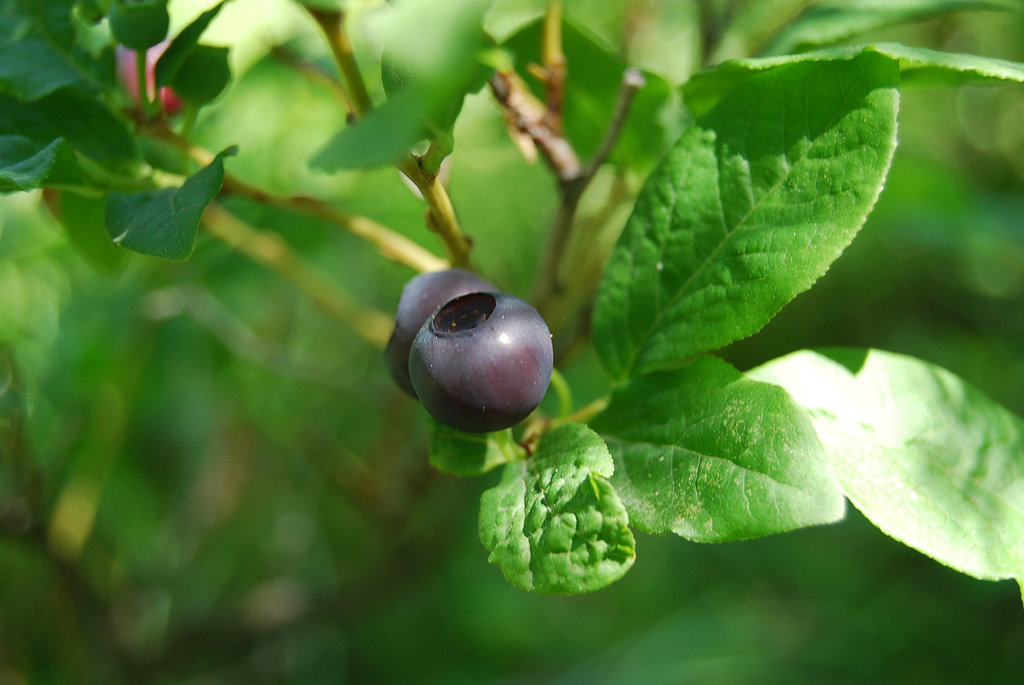
The taste of huckleberries.  I remember one camping trip in particular when we went hiking looking for the berries.  Although I was normally the most sluggish and tired child in my family, the clean mountain air and the prospect of those indescribably delicious berries gave me boundless energy.  I was first in line on the trail, often having to stop and turn back to wait for the others.  I would stand in the midst of the huckleberry patch, putting more of the sweet, tart berries in my mouth than in my bucket, staining my lips reddish purple.  Later, there would be pancakes with bursts of warm berry goodness all through them.

Wild onions.  I know, that sounds like a weird one.  I used to love to see how many things I could find to eat growing near our country home.  One year I found wild onions, and although I thought that I hated onions, the taste of those onions pulled out of the ground, an offering of nature free for the taking, was wonderful to me.  Sweet, pungent, delicately crisp.  I’ve never tasted any onion better than those little wild ones.

Ice skating.  My mother loves to skate, and she taught all of us kids.  I actually liked to watch mom do her little jumps and spins better than actually skating.  Once she took us out to a local lake that had frozen solid after many days of subzero weather.  There was no snow on the lake, so the whole thing had become a playground for brave skaters.  It was frightening at first, especially when we would hear those sounds like gunshot which meant that the lake was freezing deeper.  I never felt happier or freer than I did gliding across that big frozen lake.

Photo by hello-julie


Unknown's avatar

Eat Local

by Doug Kerr

by Doug Kerr

(Continued from Simplicity of Wellness: Love For the Earth and its Creatures , and  Grow and Cook Your Own Food )

3.  Eat local.

“Shake the hand that feeds you.”  – Michael Pollan, In Defense of Food: An Eaters Manifesto

There’s an organic farm about five miles from my home. When I went there once to buy some produce, the farmer, Mr. Alvarez, took time to talk to me about his farm.  He was very proud that he had developed a new cultivar of chile.  He was also very proud of the fact that the food he grows is safe.  It’s safe for his own family.  It’s safe for the farm laborers, without whom Mr. Alvarez’s produce would not make it to market.  And it’s safe for us, the eaters.  That day I saw where my food came from.  I went into the field and picked my own very fragrant basil.  I filled bags with gorgeous looking heirloom tomatoes, potatoes, chiles, zucchini, garlic, and onions.  And when I returned home with my booty, my family and I enjoyed the taste of the uncommonly fresh and delicious food.

Most of us simply cannot grow all of our own food.  That does not mean that we always have to settle for the well-traveled mystery foods from the grocery store.  I say mystery foods because even when we buy fresh, unprocessed whole foods, we usually have no idea where exactly it came from (somewhere in California?) or whether we can trust that “natural” or “organic” label.  But when we go out to the farm or visit the local farmer’s market, we get to “shake the hand that feeds” us.

By Natalie Maynor

By Natalie Maynor

Eating local foods is good for us because the foods are fresher and often safer.  We can ask the farmer how exactly he deals with pests and what type of fertilizers he uses.  We can chat with him about food and farming, maybe getting a feel for why he does what he does.  This builds confidence and trust.

Eating locally is better for the planet as well because it circumvents the very wasteful and polluting food distribution system now in place.  We don’t need millions of semi trucks on the road if we buy from the farmer next door.

Eating locally is especially important for carnivores.  More and more people are becoming aware of the issues surrounding factory farmed meat, milk, and eggs.  But if you’re not one of those people, I suggest you take a look at Food Inc., or one of the many other documentaries exposing the filth and cruelty of factory farming.  I saw the film, but I didn’t need to.  I live where the practices of factory farming are baldly exposed to the public, and it’s very distressing to see (and smell!).

“Were the walls of our meat industry to become transparent, literally or even figuratively, we would not long continue to raise, kill, and eat animals the way we do.”
― Michael Pollan

Many people are unaware of the fact that when they eat factory farmed meat, they are getting far more than they bargained for.  Along with the protein and fat, we’re eating significant levels of antibiotic residue, artificial hormones, and agricultural chemicals.  This is wreaking havoc on our endocrine and immune systems, and it seems to be contributing in large measure to the current epidemic of antibiotic resistance.  Not only that, but the runoff from said farms pollutes the air, the waterways, and the land that we depend on.

“I dislike the thought that some animal has been made miserable to feed me. If I am going to eat meat, I want it to be from an animal that has lived a pleasant, uncrowded life outdoors, on bountiful pasture, with good water nearby and trees for shade.”  – Wendell Berry

Happy cows make good milk.  Chickens allowed to express their innate chickennes lay really nice eggs.  Meat from pastured animals is just better in so many ways.

by Rachel Kramer

by Rachel Kramer

Eating local foods shows love and respect for the creator, ourselves, our families, and for the planet, especially it’s animals.  But this may not always be easy.  It’s definitely not as convenient to shop at the farmer’s market or go out to the farm.  Buying locally produced grass-fed animal products often takes forsight and planning.  I very often fall short of my own ideals in this respect.  Alright, almost always, especially in the winter.  But I try.  And when I succeed, my body thanks me and my conscience is comfortable.

http://www.youtube.com/watch?v=5eKYyD14d_0

Look for sources of local food at:

Eatwild’s Directory of U.S., Canadian and International Farms & Ranches

Local Harvest

Photos by Doug Kerr , Natalie Maynor , and Rachel Kramer