

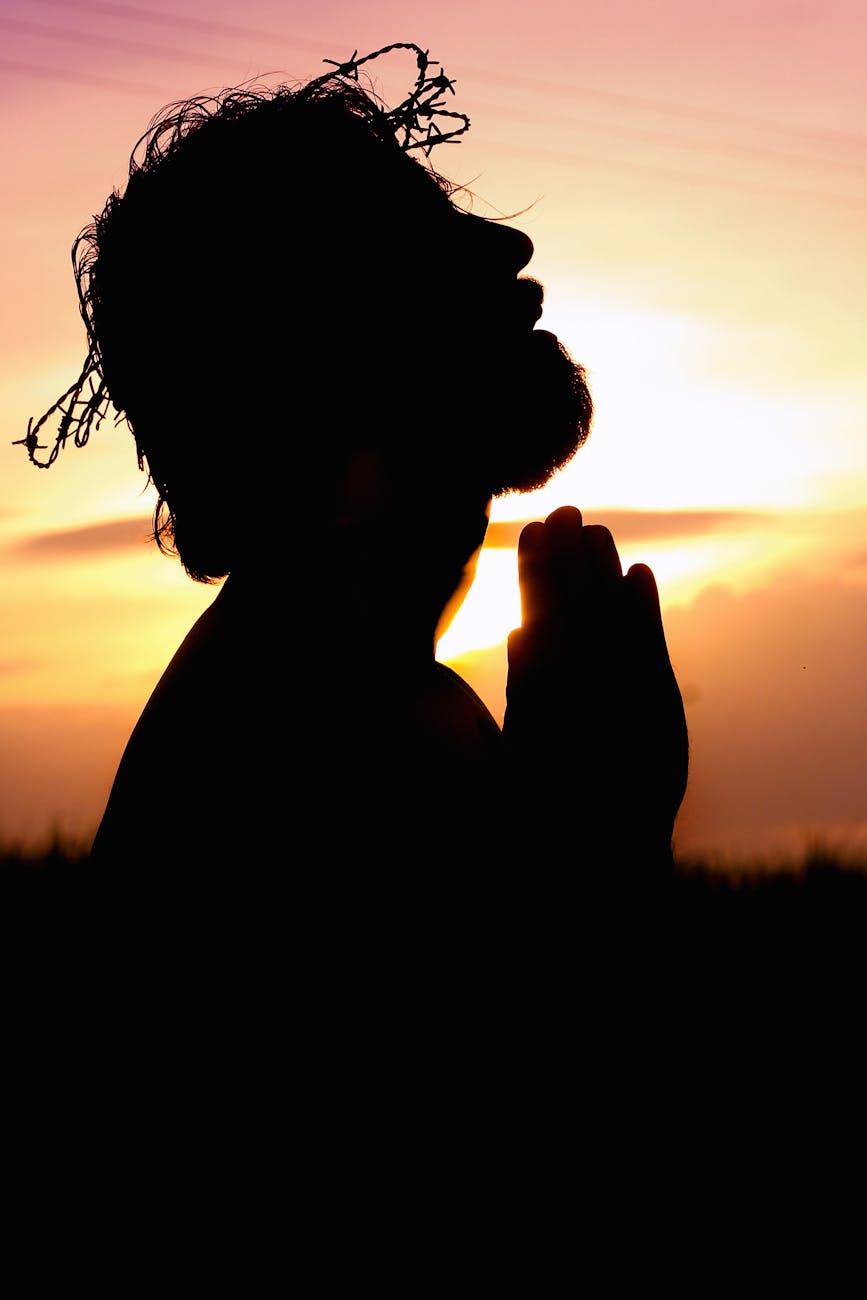
“Why do Christians believe in the doctrine of the Trinity? We believe in it because we are forced into this view by the triune God.” – Dr. David Wood
When I was a Jehovah’s Witness, one of my favorite publications was what we called “the Trinity brochure.” I thought it showed how utterly ludicrous the idea of a triune God really was. It filled me with scorn for Trinitarians and for “Christendom” as a whole. To my young mind, “the facts” presented therein seemed undeniable, irrefutable. I had never been taught the difference between biblical exegesis and eisegesis. I didn’t know how to check sources or read things in context. I just trusted that the monolithic-seeming Watchtower organization, the “society,” as we called it decades ago, was backed by God and that everything they published was of the highest possible quality. That being the case, I assumed that the (anti)Trinity brochure really was the last word on the Trinity. And it was no wonder that I felt strongly about rejecting the Trinity. The organization teaches that those who teach the Trinity are actually the antichrist:
“For centuries, the churches propagated the doctrine of the Trinity, claiming that the Father and the Son are part of the same entity. The antichrist thus shrouds in mystery the identity of Jehovah God and Jesus Christ. ” – Watchtower 2015 6/1 p. 15
In my last post, After the Org, I described the gut-wrenching process of waking up to “the truth about the truth”, coming out of the Watchtower organization, and becoming a baptized, born-again Christian. One of the most difficult parts of waking up was the realization that I really did not know anything, and that some of my most cherished beliefs might actually be dead wrong. The Trinity was my biggest bugaboo of all. When I first ventured outside the organization to find Christian fellowship, I landed in an online forum full of disgruntled JWs. Many if not most of them were aware that the 1914 doctrine was false, that the beginnings of the organization were dubious, and that it was currently plagued by lawsuit after lawsuit related to child sexual abuse. But everyone there still believed the majority of the JW doctrines, including the Witnesses’ stance on the Trinity.
It didn’t take long before I realized that the JW forum I was in felt wrong. One member in particular tried to help us understand that if the organization was wrong on 1914, which we all believed it was, there was no basis to believe it had ever been appointed as God’s one and only channel of communication to man, as it had always claimed. It had never had any real authority. It wasn’t long before that member was banned, which disturbed me. Why couldn’t he express his ideas? Actually, he had made sense to me. It was around this time that I decided to read the New Testament all the way through without my “Watchtower goggles” on. I was making amazing discoveries, which soon led me to another non-Trinitarian ex JW group. At least there, it was recognized that Jesus was of central importance and that it was okay for us to talk to him and thank him for what he had done for us. It was also taught there that there is only “one hope, one faith, and one baptism.” They helped me to understand the scriptures that showed that all Christians must be born again and that those who are will spend eternity with Christ in heaven. But something was still wrong. How could this tiny group of ex JWs be the only Christians in the world who were teaching the truth?
I began to search in earnest for a non-Trinitarian church to attend. I saw that Unitarian churches don’t teach the Trinity, but their disregard for the Bible as the inspired word of God was very troubling. I found all sorts of small, online groups that do not teach the Trinity, but it seemed that most of them were extremely works based and fixated on adherence to the Mosaic law. I saw that the group originally started by Charles T. Russel, the International Bible Students Association, was still active, but all the congregations were on the wrong side of the country, as was the case with other similar groups such as the Christadelphians.
It simply did not make sense to me that the Kingdom of God could be so impotent that the only vestiges of his true congregation were scattered so far and wide that it would be impossible for me to meet with any of them. Jesus said, “… on this rock I will build my church, and the gates of hell shall not prevail against it…” It seemed to me that either the gates of hell had actually prevailed against the congregation of God, or I was wrong about the Trinity. And if it was true that the Watchtower organization had never had any real authority, everything I had been taught had to be questioned.
It was then that I decided to actually consider what Christians had to say about their own beliefs. David Bercot, an ex JW turned Anabaptist, was the first Christian teacher I allowed myself to listen to on the subject of the Trinity. His video, Can Jehovah’s Witnesses Believe the Trinity?, explained the concept of the Trinity to me in a way I had never heard before. It was mind-blowing at the time. I left a comment on the video: “I already believe most of that. Why do we have to call it a Trinity?” The problem was that as a JW, I had had a wrong concept of the Trinity all along. Many JWs seem to believe that Modalism, the concept that Jesus, the Father, and the Holy Spirit are all the same person, is the Trinity. Bercot explained that Modalism, far from being the Trinity, is actually an anti-Trinitarian Heresy. He explained that the Father, Son, and Holy Spirit are three persons who are in such perfect unity that they are actually one God. Now that made biblical sense to me.
Mike Winger was the first Christian apologist I listened to who had never been a JW. His video, The Trinity, Can We Defend it Biblically?, was very eye opening. It helped me to realize one inescapable truth: the Hebrews were not ever to worship any other God besides Yahweh/Jehovah. This was the very first of the 10 commandments. (Exodus 20:1-6) And yet, Jesus accepted worship. (John 20:27-28; Matthew 14:33; 28:8-9) And Father God says in Hebrews chapter 1: “Let all the angels of God worship Him (Jesus).” And in vs. 8: “But to the Son He says: Your throne, O God, is forever and ever.” God the Father is calling Jesus God and asking for him to be worshipped. JWs will try to explain these verses away by saying that nearly all modern Bibles have translated these verses incorrectly. Admittedly, I am not a Greek scholar. But when I checked the Greek for myself, it seemed the Witnesses were wrong. And the great thing about the internet is that if you’re not a Greek scholar, you can read or listen to someone who is, which is exactly what I did. In doing that, I learned about many, many areas where the New World Translation (the translation of the Bible specifically translated by and for Jehovah’s Witnesses) had been translated in ways that supported JW doctrine, but which did not reflect the meaning of the original languages.
Even as a new understanding about the nature of Christ Jesus was dawning on me, I had important questions. If Jesus is God, why did he pray to the Father? Why did he say “the Father is greater than I”? Why did Jesus say that only the Father knows “the day and hour” of the second coming?
I found that the answer to those questions is not that hard. Paul answered them in his letter to the Philippians:
“Have this way of thinking in yourselves which was also in Christ Jesus, who, although existing in the form of God, did not regard equality with God a thing to be grasped, but emptied himself by taking the form of a slave, by being made in likeness of men.” – Philippians 2:5-7 (LSB)
Jesus was fully God. But he was also fully man. He had “emptied himself” by becoming a man. He had voluntarily put himself in a position that was lower than that of the Father in order that he might live among us, experience what we experience, and eventually die a sacrificial death which would set us all free. He prayed to his Father because he needed to pray. Jesus remembered what life was like in heaven with his Father, which is why he prayed, “Now, Father, glorify Me together with Yourself, with the glory which I had with you before the world was.” – John 17:5 (LSB) He remembered His former glory and knew that the Father would return him to that glory. Paul goes on to write of Jesus in Philippians 2:
“And being found in appearance as a man, He humbled Himself and became obedient to the point of death, even the death of the cross. Therefore God also has highly exalted Him and given Him the name which is above every name, that at the name of Jesus every knee should bow, of those in heaven, and of those on earth, and of those under the earth, and that every tongue should confess that Jesus Christ is Lord, to the glory of God the Father.” (NKJV)
Faithful Hebrews did not bow to any God other than Yahweh/Jehovah. The three young Hebrews, Hananiah, Mishael, and Azariah (Shadrach, Meshach, and Abed-nego) preferred burning to death in Nebuchadnezzar’s fiery furnace to bowing to a foreign God. (Daniel 3:8-18) So how is it that Paul felt justified in writing that “every knee should bow” to Jesus Christ?
Dr. Michael Heiser writes: “The ancient Israelite knew two Yahwehs—one invisible, a spirit, the other visible, often in human form. The two Yahwehs at times appear together in the text, at times being distinguished, at other times not. Early Judaism understood this portrayal and its rationale. There was no sense of a violation of monotheism since either figure was indeed Yahweh. There was no second distinct god running the affairs of the cosmos. During the Second Temple period, Jewish theologians and writers speculated on an identity for the second Yahweh. Guesses ranged from divinized humans from the stories of the Hebrew Bible to exalted angels. These speculations were not considered unorthodox. That acceptance changed when certain Jews, the early Christians, connected Jesus with this orthodox Jewish idea. This explains why these Jews, the first converts to following Jesus the Christ, could simultaneously worship the God of Israel and Jesus, and yet refuse to acknowledge any other god. Jesus was the incarnate second Yahweh. In response, as Segal’s work demonstrated, Judaism pronounced the two powers teaching a heresy sometime in the second century A.D.”
We see the two powers in heaven concept throughout the Old Testament. This was something that I was able, with God’s help, to see as I read the Bible with new eyes even before I understood the ancient Jewish thinking. As a JW, I had never understood why, when the Angel of Jehovah would appear to them, the ancient Israelites would call him Jehovah. (Genesis 16:7-12; 21:17-18; 22:11-18; Exodus 3:2; Judges 2:1-4; 5:23; 6:11-24; 13:3-22; 2 Samuel 24:16; Zechariah 1:12; 3:1; 12:8). I knew that in Exodus 33:20, God had said to Moses “You cannot see my face, for no man can and see me and live.” I also knew that it said in John 1:18, “No one has seen God at any time.” There seemed to be a contradiction. How was Jehovah appearing to the patriarchs and to Moses if it is not possible to see God? It gradually dawned on me that the person who was appearing to them must have been the preincarnate Jesus and that Jesus was and is Jehovah/Yahweh just as his Father in heaven, who cannot be seen by mortal humans, is. Jesus had to be a visible, audible, manifestation of the God of heaven.
It seems that first century Jewish Christians understood Jesus to be the second Yahweh/Jehovah, the one who manifested as the Angel of the Lord. But why was this impossible for most of the Jewish religious leaders to accept? It seems that they had lost the forest for the trees. They were so focused on miniscule details about who they expected the Messiah to be that they missed him when he came. Alfred Edersheim explains: “Of course, there was the danger that, amidst these dazzling lights, or in the crowd of figures, each so attractive, or else in the absorbing interest of the general picture, the grand central Personality should not engage the attention it claimed, and so the meaning of the whole be lost in the contemplation of its details.”
He goes on to explain: ” …all that Israel hoped for, was national restoration and glory. Everything else was but means to these ends; the Messiah Himself only the grand instrument in attaining them. Thus viewed, the picture presented would be of Israel’s exaltation, rather than of the salvation of the world. To this, and to the idea of Israel’s exclusive spiritual position in the world, must be traced much, that otherwise would seem utterly irrational in the Rabbinic pictures of the latter days.” They failed to realize the grand scope of the Messianic hope and thus, instead of welcoming their Messiah, Jesus, with open arms, they rejected him, even accusing him of having a demon.
In a similar way, Jehovah’s Witnesses diminish the role of the Messiah. Although they understand Jesus to be the Messiah, they deny his deity, prohibiting his worship in direct opposition to the Father’s own words in Hebrews chapter 1. Even worse, they accuse worshippers of Jesus of being demonically inspired. Just like the first century Pharisees, they attribute the work of the Holy Spirit to the demons. (Matt. 12:31-32)
Once I understood all that I have just presented, John 1:1 began to make sense to me. That one text was probably attacked more than any other by Jehovah’s Witnesses. I was well-trained to argue against its clear meaning since it was the one most often used by Trinitarians to teach the deity of Christ. It was wonderful to finally understand that John 1:1 had not been mistranslated or misinterpreted. It means what it says, and what it says is so elegantly beautiful that it brings tears to my eyes.
“In the beginning was the Word, and the Word was with God, and the Word was God. He was in the beginning with God. All things came into being through Him, and apart from Him nothing came into being that has come into being. In Him was life, and the life was the Light of men. And the Light shines in the darkness, and the darkness did not overtake it.
There was a man having been sent from God, whose name was John. He came as a witness, to bear witness about the Light, so that all might believe through him. He was not the Light, but he came to bear witness about the Light. There was the true Light which, coming into the world, enlightens everyone. He was in the world, and the world was made through Him, and the world did not know Him. He came to what was His own, and those who were His own did not receive Him. But as many as received Him, to them He gave the right to become children of God, even to those who believe in His name, who were born, not of blood nor of the will of the flesh nor of the will of man, but of God.
And the Word became flesh, and dwelt among us, and we beheld His glory, glory as of the only begotten from the Father, full of grace and truth. John bore witness about Him and cried out, saying, “This was He of whom I said, ‘He who comes after me has been ahead of me, for He existed before me.’” For of His fullness we have all received, and grace upon grace. For the Law was given through Moses; grace and truth came through Jesus Christ. No one has seen God at any time; the only begotten God who is in the bosom of the Father, He has explained Him.” ~John 1:1-18 (LSB)
